
Venus is the hottest planet of our solar system. It is hottest not because it is closest to sun but because of dense atmosphere that surrounds the planet.
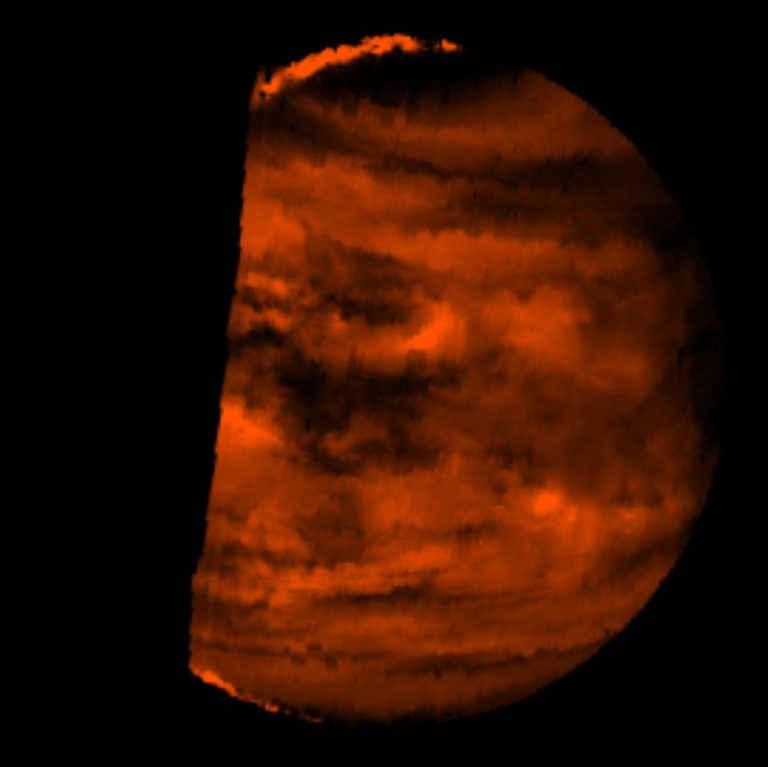
Venus’ atmosphere consists mainly of carbon dioxide, with clouds of sulfuric acid droplets. The thick atmosphere traps the Sun’s heat, resulting in surface temperatures higher than 880 degrees Fahrenheit (470 degrees Celsius). Venus is tidely locked which means its one surface always face to sun which make it the hottest planet in our solar system. The atmosphere has many layers with different temperatures. At the level where the clouds are, about 30 miles up from the surface, it’s about the same temperature as on the surface of the Earth.
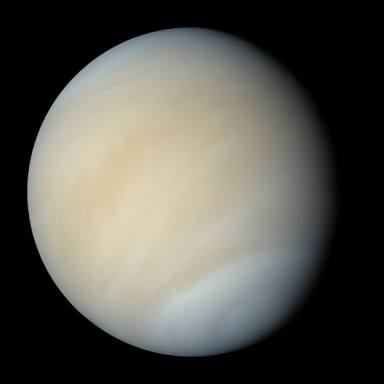
There are many opinions related to this topic among scientists with some scientists thinking that “the culprit is disulfur dioxide, a rare gas composed of two sulfur and two oxygen atoms which does not exist on Earth”. It could be absorbing much of the ultraviolet (UV) light entering Venus’s atmosphere, similar to the way Earth’s ozone layer protects our planet from UV rays.
Whereas some think that they can be absorbed by some kind of life form living in the atmosphere of Venus. As per the recent discoveries, it is clear that phosphine gas (composed of one phosphorus and the hydrogen atoms,PH3 )which is also found on earth and can only be processed by living cells .The atmosphere of Venus is so thick that later Venera space Programs sent by Russia were sent without any landing facility because of the dense atmosphere of the planet.
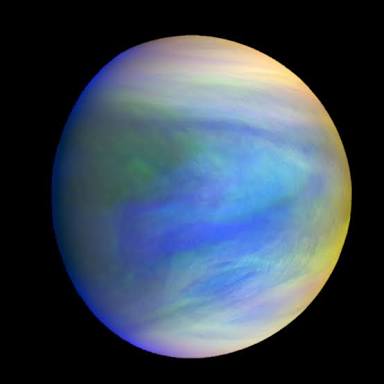
The conditions of atmosphere in Venus resembles the condition under our water bodies on earth and we know maximum organisms live in oceans on Earth, so it is possible that Venus has life forms totally different from the life forms we see on Earth.
 Interesting science things and new theories